Reading the Unspoken Face: A History of Facial Micromovement Science, From Duchenne to Apple's Q.ai
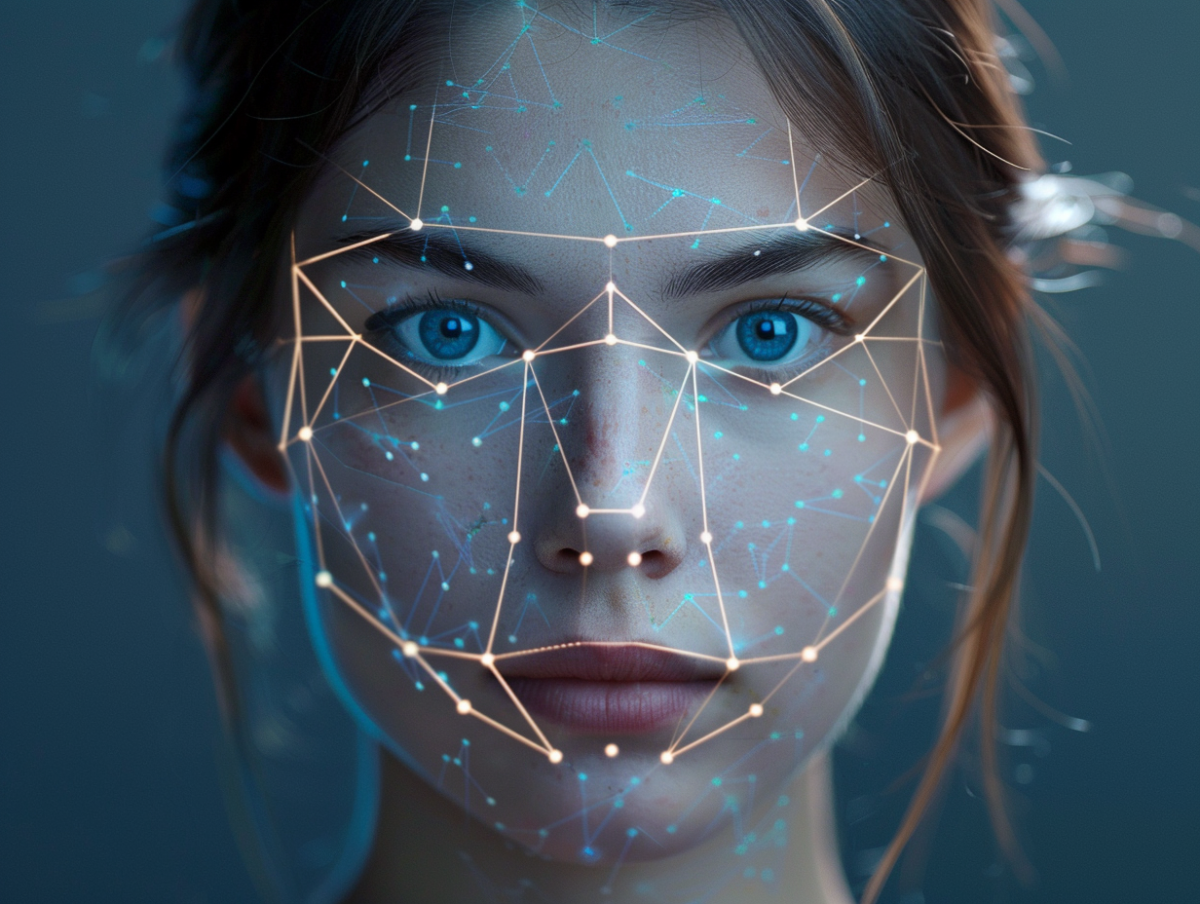
When I read that Apple had paid somewhere between $1.6 billion and $2 billion for a hundred-person Israeli startup called Q.ai, its second-biggest acquisition ever after Beats, my first thought wasn't about AirPods. It was about a very strange 19th-century Frenchman who used to attach electrodes to strangers' faces and photograph the results.
That's the thing about "new" technology that reads the face. It rarely is new. Q.ai's patents describe a headset that shines light onto your skin, watches how the reflected speckle pattern shifts as your facial muscles twitch by fractions of a millimeter, and uses that to reconstruct words you never said out loud, while, almost as an afterthought, also estimating your heart rate, your breathing, and your emotional state. It sounds like science fiction. It is, at its core, the same question a small handful of obsessive researchers have been chasing since the 1850s: if the face moves before we're aware of it, and moves in ways we can't fully control, what is it actually telling us, and who gets to read it?
I want to walk through that history properly, because the current moment, with Apple, Meta, and half of Silicon Valley suddenly racing to put sensors on your face and wrists to catch what your body says before your mouth does, makes a lot more sense once you've seen where it started.
The Doctor and the Battery
The story more or less begins with Guillaume-Benjamin Duchenne de Boulogne, a French neurologist working in Paris in the 1850s. Duchenne was obsessed with a genuinely odd question: could you isolate the exact muscle responsible for each human expression by triggering it directly? His method was as blunt as it sounds. He applied electrical current, known as "faradization" in the terminology of the day, to individual facial muscles, mostly using a single elderly patient whose facial palsy left him largely insensitive to the pain this caused, and photographed the resulting expressions with the photographer Adrien Tournachon. The result, published in 1862 as Mécanisme de la Physionomie Humaine, was effectively the first attempt at a muscle-by-muscle map of human emotion.
Duchenne believed the face was something close to a divine instrument, each muscle wired to a specific emotional truth, and that most people's smiles were fakes, missing the involuntary contraction around the eyes that only a genuine feeling of joy could trigger. That distinction has outlived him by more than 150 years: it's why we still talk about a "Duchenne smile" as shorthand for a real one. Charles Darwin was paying close attention. He corresponded with Duchenne and reproduced several of his photographs in The Expression of the Emotions in Man and Animals (1872), arguing that facial expressions weren't culturally learned performances but evolved, largely universal signals, a claim that would sit dormant for the better part of a century before anyone had the tools to test it properly.
What strikes me most, looking back, is that Duchenne had already identified the core insight everything since has built on: the face contains information that the person producing it doesn't fully control, and doesn't always intend to broadcast. He just had to shock it out of people to see it clearly. Everything that follows is really a search for gentler, less invasive ways to catch the same thing happening on its own.
Leakage
Jump forward almost exactly a century. In 1966, two researchers named Ernest Haggard and Kenneth Isaacs were doing something tedious: scanning motion-picture film of psychotherapy sessions, frame by frame, hunting for signs of nonverbal communication between patient and therapist. Buried in that footage they found something nobody had described before: fleeting, fractional-second facial expressions that flickered across a patient's face and vanished, invisible at normal playback speed. They called them "micromomentary expressions."
Three years later, Paul Ekman and Wallace Friesen stumbled onto the same phenomenon independently, and their case became the one that stuck in the field's memory. They were reviewing a filmed interview with a hospitalized patient, referred to in the literature as "Mary," who had told her doctors she felt much better and asked for a weekend pass home. She seemed convincingly cheerful. It was only when Ekman and Friesen slowed the tape down that they caught it: a flash of raw distress lasting a couple of frames, concealed almost instantly behind a practiced smile. Mary, it turned out, was concealing her intent to end her life; the pass was not granted. That single clip did more to legitimize the study of micro-expressions than a decade of theorizing could have.
Ekman spent the following years turning that observation into a system. Working with a coding framework that had originated with the Swedish anatomist Carl-Herman Hjortsjö, he and Friesen published the Facial Action Coding System (FACS) in 1978. FACS broke the face down into forty-some independent "action units," each tied to a specific muscle or muscle group, deliberately stripped of emotional interpretation so that any expression could be described purely in terms of what moved. It's a genuinely elegant idea: instead of arguing over whether someone looks "angry" or "annoyed," you record that their brow lowered and their lids tightened, and let the interpretation happen downstream. FACS became the closest thing the field has to a common alphabet, still in active use today in psychology, animation, and computer vision, and it's the direct ancestor of the "action unit" language you'll find buried in Q.ai's own patent filings.
By the 1980s, Ekman had also given the field its emotional core claim: that a small set of expressions (anger, disgust, fear, happiness, sadness, surprise, later joined by contempt) appear to be produced and recognized in strikingly similar ways across very different cultures, including by people blind from birth who have never seen a face make them. That universality claim has taken plenty of scholarly hits since (context, it turns out, matters enormously, and "reading" an expression accurately is harder than the popularized version of Ekman's work suggests). But it's the foundation nearly every automated emotion-detection system since has been quietly built on, for better and for worse.
Teaching a Camera to See What We Can't
For most of the twentieth century, catching a micro-expression meant a trained human squinting at slowed-down film, frame by frame. That's an enormous bottleneck, and it's basically why micro-expression research stayed a niche corner of psychology for decades rather than becoming a technology.
Two things broke the bottleneck open. The first was cheap computer vision. Once cameras, storage, and processing power got good enough, researchers started building high-speed, high-resolution datasets specifically to train machines to spot what human eyes miss: CASME and CASME II out of China, SAMM out of the UK, each capturing several hundred spontaneous micro-expressions at 200 frames per second, painstakingly labeled frame-by-frame with onset, peak, and offset, and tagged against Ekman's action units. These datasets are still small by modern machine-learning standards, a few hundred usable clips each, which is one reason the field has leaned so heavily on techniques like "motion magnification" to artificially amplify barely-visible muscle movement before feeding it to a classifier. It's a strange, slightly recursive idea: build an algorithm whose whole job is to make the invisible more visible, then build a second algorithm to read it.
The second unlock was the commercial one, and it has a specific origin story worth telling. In the mid-2000s, a computer scientist named Rosalind Picard at the MIT Media Lab, who had more or less founded the field of "affective computing" with a 1997 book of the same name, was joined by a PhD student named Rana el Kaliouby, whose own motivation was almost embarrassingly human: she was living in Boston, homesick for her family in Egypt, and frustrated that video calls stripped out all the facial nuance that made a conversation feel real. Together they built a system that could track facial expressions through an ordinary webcam and infer emotional and cognitive states from them, initially aimed at helping people with autism read expressions they found hard to interpret. In 2009 they spun it out as Affectiva, and by the mid-2010s the company had turned it into an advertising-testing tool, quietly analyzing millions of faces watching commercials to tell brands whether their ads actually landed. It's a strange thing to sit with: the same technical lineage that traces back to a woman missing her family in Egypt ended up, a decade later, optimizing Kellogg's cereal ads.
Somewhere in the same period, researchers also discovered, almost by accident, that an ordinary camera could pull far more than expression off a face. In 2008, a team led by Wim Verkruysse showed that a plain, unmodified consumer camera under normal room light could detect the tiny, invisible color changes in skin caused by blood pulsing beneath it, essentially reinventing the pulse oximeter without any contact at all. Poh, McDuff, and Picard refined this into a real-time, motion-tolerant system in 2010 and 2011, able to pull heart rate, breathing rate, and later heart-rate variability out of nothing but video of a face. Around the same time, a team at MIT led by Hao-Yu Wu and Michael Rubinstein built Eulerian Video Magnification, a technique that amplifies subtle color and motion changes in ordinary video until you can watch a person's pulse move visibly through their skin. Put those two threads together, action-unit-based expression reading and camera-based physiological sensing, and you have, essentially, the entire technical premise Q.ai is now selling to Apple, just built from cameras instead of lasers.
Teaching the Body to Speak Without a Voice
There's a second lineage feeding into this moment, and it runs through a very different problem: how do you let someone communicate when they can't, or don't want to, make a sound?
The earliest serious attempt is older than most people assume. In 1959, a researcher named Edfeldt used electromyography (electrodes that pick up the tiny electrical signals produced when a muscle fires) to study "subvocal speech," the idea that when we read silently or talk to ourselves internally, our speech muscles still twitch faintly, even with no sound produced. Through the 1980s, researchers refined EMG-based systems that could distinguish between small sets of pre-recorded words this way, and in the 2000s, NASA's Ames Research Center ran experiments using subvocal recognition to let astronauts communicate in the kind of noisy, high-G environments where speaking aloud isn't practical, early systems that worked but needed bulky gel electrodes and could only handle a tiny vocabulary.
The idea stayed a research curiosity until 2018, when Arnav Kapur and colleagues at the MIT Media Lab unveiled AlterEgo: a wearable, worn along the jaw and neck, that picked up neuromuscular signals from the same subvocalization and used machine learning to decode them into words, reportedly reaching over 90% accuracy for simple commands, and notably working even when the wearer didn't move their lips or make any sound at all. AlterEgo spun out into its own company in 2025 and has since been trialed with ALS and MS patients, for whom it functions less as a novelty and more as a genuine communication lifeline.
Q.ai's contribution is to take that same underlying goal, reading intended speech from the body rather than the air, and pursue it optically instead of electrically. Their patents describe a head-worn device that projects coherent light onto small patches of facial skin and reads the reflected "speckle" pattern, a laser-imaging technique more commonly used to measure vibration or blood flow, repurposed here to detect skin displacement small enough to be measured in tens of microns, thinner than a human hair. The claimed sensitivity is enough to pick up muscle recruitment associated not just with mouthed or whispered words, but potentially with the earliest stages of articulation, before a word is even fully formed. It's the same instinct as EMG-based silent speech, aimed at the same muscle groups Duchenne was electrically shocking a hundred and seventy years earlier, just approached from the outside with light instead of from underneath with a needle or gel electrode.
The Face as an Instrument Panel
Here's where the two lineages, expression-reading and silent-speech-reading, visibly converge, and where the story gets more uncomfortable.
Q.ai's patent filings don't stop at decoding non-verbal words. They describe the same optical speckle system feeding separate interpretation modules for emotional state, heart rate, and respiration rate, with the patent language explicitly invoking photoplethysmography-style principles, the same optical-blood-flow trick Verkruysse and Poh's teams demonstrated with ordinary webcams, to extract a pulse from micro-vascular changes in skin. In other words: the same wearable that reads your mouthed words is, in the same breath, positioned to infer how stressed, tired, or aroused you are, from cues your face produces involuntarily.
There's real physiology behind why this might work at all. Cognitive and emotional states genuinely do modulate facial muscle tension, breathing rhythm, and microvascular blood flow, that's not invented; it's the same substrate Duchenne, Ekman, and Picard's affective-computing lineage have all been drawing on for a century and a half. Contactless heart rate and breathing estimation from optical signals is a well-replicated finding at this point. But there's an enormous, easy-to-miss gap between "this signal correlates with physiological arousal in a controlled lab setting" and "this device can reliably tell you someone is anxious while they're walking down a noisy street in bad lighting." Every honest paper in this space flags the same confounds: motion, ambient light, skin tone, individual variation, and the simple fact that a racing heart means something completely different if you've just run up a flight of stairs versus just gotten bad news. Ekman's own universality claims for basic emotions have faced serious scholarly pushback for exactly this reason: expression and physiology are noisy, context-dependent signals, and turning them into a clean "mood score" is a much bigger leap than turning them into a heart-rate number.
That hasn't stopped the ambition. If this technology does make its way into Apple's actual product line (and acquiring the patents is a long way from shipping the feature), the plausible use cases look almost mundane by design: Vision Pro easing off notifications when it senses fatigue building during a long immersive session; AirPods deciding when to nudge on live translation or dial back noise cancellation based on stress cues; a version of Siri that works reliably even when you can't or won't speak aloud, in a meeting, on a train, or simply because you value not narrating your life to the people around you. None of that requires reading your mind. It requires reading your face slightly better than a human sitting across from you already can, which, if Duchenne, Ekman, and everyone since have taught us anything, your face has been doing without your permission for a very long time anyway.
What's Actually New
So is this new? Not the underlying premise. The face has been treated as a leaky, semi-involuntary broadcast of internal state since at least 1862, and every subsequent leap (Ekman's action units, Affectiva's webcam-based emotion scoring, Poh and Picard's contactless vital signs, Kapur's subvocal wearable) has been a steady erosion of the cost of catching that leak. What's actually new is the packaging: for the first time, the sensor doing the reading isn't a researcher with a stopwatch, a therapist's film reel, or a lab-grade camera rig, but a consumer device you might already be wearing in your ears by next year, made by a company with more than two billion active devices already in the world.
That's the door Apple's Q.ai deal is quietly nudging open, not brain reading, not anything close to it, but a narrowing of the distance between what your face does without asking your permission and what your devices decide to do about it. Duchenne needed a battery and a very patient, very unfortunate volunteer to catch a flicker of muscle. Whatever ships out of this acquisition will need neither. It'll just need you to have a face, and to be standing near it.
References
- Duchenne de Boulogne, G.B. (1862). Mécanisme de la Physionomie Humaine. Jules Renouard. The founding atlas of facial-muscle mapping, built on electrically triggered expressions photographed with Adrien Tournachon.
- Darwin, C. (1872). The Expression of the Emotions in Man and Animals. John Murray. Argued, drawing on Duchenne's photographs, that facial expressions are evolved and largely universal rather than culturally learned.
- Haggard, E.A. & Isaacs, K.S. (1966). Micromomentary Facial Expressions as Indicators of Ego Mechanisms in Psychotherapy. In Methods of Research in Psychotherapy, Springer. First description of fleeting, sub-second facial expressions invisible at normal playback speed.
- Ekman, P. & Friesen, W.V. (1969). Nonverbal Leakage and Clues to Deception. Psychiatry, 32(1), 88–106. The "Mary" case that established micro-expressions as clinically significant.
- Ekman, P. & Friesen, W.V. (1978). Facial Action Coding System. Consulting Psychologists Press. The muscle-by-muscle "action unit" taxonomy still used in psychology, animation, and computer vision today.
- Picard, R.W. (1997). Affective Computing. MIT Press. Founding text of the field that gave rise to Affectiva and webcam-based emotion recognition.
- Verkruysse, W., Svaasand, L.O. & Nelson, J.S. (2008). Remote Plethysmographic Imaging Using Ambient Light. Optics Express, 16(26), 21434–21445. Showed an ordinary camera could recover a pulse signal from skin colour changes alone.
- Poh, M.Z., McDuff, D.J. & Picard, R.W. (2011). Advancements in Noncontact, Multiparameter Physiological Measurements Using a Webcam. IEEE Transactions on Biomedical Engineering, 58(1), 7–11. Real-time, motion-tolerant heart rate and breathing extraction from video.
- Wu, H.Y., Rubinstein, M., Shih, E., Guttag, J., Durand, F. & Freeman, W. (2012). Eulerian Video Magnification for Revealing Subtle Changes in the World. ACM Transactions on Graphics, 31(4), 65. The technique behind amplifying invisible pulse and micro-motion in ordinary video.
- Kapur, A., Kapur, S. & Maes, P. (2018). AlterEgo: A Personalized Wearable Silent Speech Interface. In Proceedings of the 23rd International Conference on Intelligent User Interfaces, ACM, 43–53. Neuromuscular subvocalization decoded into words without audible speech.
- Q.ai (2024). Patent filing WO2024018400A2. Describes the optical speckle-pattern headset for silent-speech and vital-sign sensing acquired by Apple.
- Borkelmans, D. (2026). Will Apple's Q.ai Acquisition Open the Door for Neuro? Neurofounders, February 2026. Reporting on the acquisition and its implications for consumer neurotechnology.